The Reception in Teotitlan del Valle, Oaxaca
Even if one enjoys the adventure of public transportation, getting
to Teotitlan del Valle, the main wool weaving village in Oaxaca, is a somewhat
daunting task. This time was no exception. We walked from our hotel to the spot
adjacent to the Abastos market where our memory told us we could catch a brown
and yellow bus that would take us to the center of Teotitlan. After about 45
minutes of unsuccessful searching through the loud dusty swirl of bus, taxi,
combi, motorcycle, bicycle, and pedestrian chaos for a glimpse of that bus, we
decided to ask for assistance from an arm waving, whistle shrieking man
directing combi (taxi) traffic. He pointed us back to the street where we had
been. “No taxis to Teotitlan on this a market day in Tlacolula.” More anxious
waiting, but still no Teotitlan
bus.
Having lost hope of catching a bus in time for the celebration and
debating what our options might be, we spied a bus marked for Mitla, beyond
Teotitlan, but, if memory served, on the same highway. Of course, in the time it took us to
recognize the name and process the location, the bus flew by. Dodging people, poles, potholes, and
traffic, we sprinted down the street in hopes of catching up. Finally the bus slowed to pick up
some passengers and we were able to jump aboard. The driver, on a tight
schedule, had little time to deal with our wheezing and feeble Spanish. We hoped that his hand signals
indicated that he would drop us at the crossroads a fair but walkable distance
outside of Teotitlan. Whew!
Closer, at least?
To our relief, as we approached the crossroads, the bus slowed and
we and a few other passengers were able to leap off. Squinting though brilliant
sun and a swirl of dust as the bus roared off, we spotted a taxi waiting on the
other side of the highway. Chiripa! The locals, always quicker and more alert,
set off at a torrid pace across the new, elevated walkway that increases the
chance of pedestrian survival. Scuttling after them as best we could, we
clearly lost the race to the taxi, but our fellow travelers kindly held the
taxi for us. With them we rode in sardine luxury to street where had visited
the Chavez family on previous visits. Chiripa!
The new Chavez house was to be the site of the reception. We were
told to just keep walking past their former home/workshop. We crossed a dry
creek and headed into the countryside. The looming table-filled tent was our
first clue that we had found it. But in typical U.S. style, we were quite early,
which gave us time to observe the party preparations. The day was warm and
bright, yet pleasant in the shade, and the atmosphere subdued. The new house, not fully finished was
open and airy. As the previous
night’s party in Oaxaca had continued through the entire night, everyone was
operating on little or no sleep. Eric and Elsa were nowhere to be seen.
Federico and Lola, Eric’s parents were busy directing various tasks. Janet and
Omar, Eric’s siblings were working on signs to direct guests to the party.
Several men of the family were sitting around a table talking. They motioned us to join them. Most of the conversation was in Zapotec
with a bit of Spanish tossed in probably for our benefit. We understood
nothing, but nodded and smiled anyway. We were offered the the refreshment of the day, Coronitas ( 7 oz
cervezas). It was all very
pleasant and low key, but as it was man talk, I drifted off to the kitchen to
see what was happening there.
The food prep area was the most fascinating. The women of the family were hard at
work. Eggs were being cracked and mixed in a large washtub. In the end who
knows how many dozens of eggs there were.
A caldron of chicken stock, nearly 6
feet in diameter was simmering over a fire and being stirred by two women using
huge bamboo poles. A tub of chicken pieces was ready to add. When fully
assembled this soup would be the first course of the celebration dinner, to be
served by the many women preparing the food.
I pitched in with the dish washing. How many would attend?
200(!!!!!) for a sit-down dinner. This would be a grand celebration! The plates
and bowls were all being washed in tubs behind the house. They are part of the
community cache of supplies that are rented for fiestas. My poor Spanish didn’t
get me far with the other helpers. But, they didn’t refuse my help although
they were quite concerned that I was not wearing an apron. They all wore aprons over their
traditional pleated skirts.
At some point Eric and Elsa arrived with their dog. They had some lunch and talked with
family members, then left again apparently they needed a nap.
After the dishes were washed, I checked in on the soup and the
tortilla-making. Two wood fired comals were in use and each giant tortilla was
hand made. What a lot of tortillas, many for each expected guest!
Then I found
another task: rolling the silverware in a napkin. This put me in the room with
the Virgin of Guadalupe altar where the gifts and special guests were received.
As we worked I heard a commotion outside. The band had assembled at the gate
and was walking up the drive playing their instruments. Once in the tent they formed a line
along the side. The men of the Chavez family moved down the line each one
greeting every band member with a traditional handshake and a slight bow. Then the family presented the
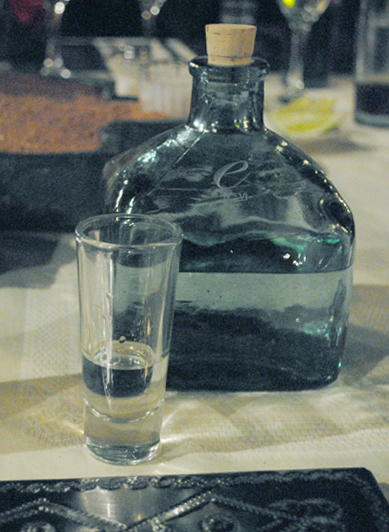
band with gifts of beer, mescal, and soda. The band took their places at one end of the tent.
Some guests began to trickle in, each greeted respectfully with
the handshake and bow. Many
brought a case of Coronitas, some a bottle of mezcal. Then there was a bit of commotion as a somewhat larger group
gathered at the gate. Omar told us
that the Village President, members of the city council, and spouses had
arrived. They solemnly walked to
the house in a group. Again the
men of the Chavez family greeted each of the dignitaries who then were ushered
into the room with the altar. The dignitaries lined one side and the
bride’s and groom’s families on
the opposite side. A formal
ceremony of what appeared to be greeting and thank you for honoring the event
followed. Members of the families spoke to the dignitaries and dignitaries
spoke to members of the families. These were serious sounding speeches, all in
Zapotec made by an individual on one side of the room to the group on the other
side. As each person spoke those on the other side of the room gave short
responses of agreement or respect almost like a call and response in a church.

From my corner where I was working on the silverware, I got to look at the back
of the beautiful dresses the guests wore.
Eric and Elsa returned and soon the guests began to arrive in
earnest and the tables under the tent filled. Warm and respectful greetings
were exchanged each time a person a new person arrived.
We took our seats as well
just in time to be served a large bowl of the chicken and egg soup accompanied
by tortillas and hot sauce. We consumed the soup with great relish thinking
that this was the meal. Shortly after the soup bowls were taken away, a main
course of grilled chicken, corn and mixed vegetables arrived. We don’t know if it was prepared on
site or brought in. It simply
appeared. As we were quite full from the delicious soup, we asked to share the
main course.
Large stacks of
tortillas arrived at every table. Apparently, many other guests also were quite
full after the soup course, as they skillfully wrapped leftovers in several
layers of the large tortillas and packed them into the plastic bags provided by
the servers.
The band played throughout the meal and then took a break and were served the wedding meal. They
too were encouraged to take food home and were given plastic bags for the
tortilla-wrapped chicken. Mezcal and cervezas were in good supply!
Dessert was served buffet style and it included a waffle cone with
coconut sorbet and a red one that we later learned was cactus fruit. While we
ate Federico and other men passed out bunches of moistened and very pleasant
smelling leafy branches that would later be used in the dances.
The tables disappeared in a hurry and the band members took their
places to begin the dance music. Again, the first dances were for the wedding
couple and then their parents. This time the dancers carried the branches. In addition the men carried large bottles
of Mezcal in one hand as they danced. This traditional dancing (a jarabe or folk dance) is quite lengthy
with the band playing the same refrain over and over. The band director put the band on autopilot and managed to
sneak in a good nap.
By this time we realized that the last bus to Oaxaca would be
leaving soon and we reluctantly decided to take our leave knowing that the
partly would last long into the night. Another couple of gringos decided to leave at the same time and we
were able to find a taxi and were able to negotiate a ride to Oaxaca for all of
us.
A fun day, we hope we did not commit too many cultural faux pas;
an experience we will not soon forget. Thank you Eric and Elsa; Lola and Fe for
making us feel welcome at such a personal time. -KL